

Introduction: The Expanding World of Popular Games
The term “Popular Games” is no longer just a casual phrase—it represents a global digital movement that has transformed how people relax, compete, and connect. From fast-paced online battles to simple mobile puzzles, popular games have become a daily part of life for millions across the world. They are played during breaks, after work, late at night, and even professionally on global stages.
What makes popular games so powerful is their ability to attract players of all ages. A child exploring a colorful mobile game, a teenager competing in online matches, or an adult unwinding after a long day—all are part of the same gaming ecosystem. The accessibility of smartphones, high-speed internet, and free-to-play models has made these games easier to reach than ever before.
However, the growing influence of popular games comes with a dual reality. On one hand, they offer entertainment, creativity, and social connection. On the other, they raise concerns about addiction, mental health, and excessive screen time. This balance between enjoyment and risk is what makes the topic of popular games both exciting and important to explore.
As the online gaming world continues to evolve, understanding the impact of popular games is essential—not just for players, but for parents, educators, and society as a whole.
The Evolution of Popular Games in the Digital Era
The journey of popular games from simple pixel-based entertainment to highly immersive digital worlds is nothing short of remarkable. In the early days, games were limited by technology—basic graphics, minimal sound, and straightforward objectives. Yet even then, they managed to capture attention and build the foundation for what would become a massive global industry.
As technology advanced, so did the complexity and appeal of games. The introduction of powerful computers, gaming consoles, and eventually smartphones completely changed the landscape. Developers began creating visually stunning environments, realistic characters, and engaging storylines that made players feel like active participants rather than mere users.
One of the biggest turning points in the evolution of popular games was the rise of the internet. Online connectivity allowed players to interact with others across the world in real time. This shift transformed gaming from a solo activity into a shared experience. Multiplayer modes, live competitions, and global leaderboards added a new level of excitement and engagement.
Mobile technology further accelerated this growth. With games now available in the palm of your hand, the audience expanded dramatically. People no longer needed dedicated gaming devices; they could play anytime, anywhere. This convenience played a major role in making certain titles truly “popular games” on a global scale.
Another important development has been the shift in business models. Earlier, players had to purchase games upfront. Today, many popular games follow a free-to-play model, earning revenue through in-game purchases, advertisements, and premium features. While this has made games more accessible, it has also introduced new challenges, especially regarding spending habits and player behavior.
The evolution of popular games is still ongoing. Emerging technologies like virtual reality, augmented reality, and artificial intelligence are pushing boundaries even further. These innovations promise to make games more immersive, interactive, and personalized than ever before.
In essence, the rise of popular games reflects not just technological progress, but also a change in how people seek entertainment, connection, and even identity in the digital age.
Key Features That Define Popular Games
Not every game achieves massive success. What separates ordinary titles from truly popular games is a combination of smart design, player engagement, and continuous innovation. These games are carefully built to attract attention, retain users, and create lasting impact.
One of the most important features of popular games is ease of entry. Players should be able to understand the basics quickly without feeling overwhelmed. A smooth onboarding experience ensures that even beginners can start playing without frustration. At the same time, deeper layers of gameplay keep experienced players interested over time.
Another defining factor is engaging gameplay mechanics. Popular games are designed to be fun, responsive, and rewarding. Whether it’s completing missions, leveling up, or unlocking achievements, players are constantly given reasons to continue playing. This sense of progress creates satisfaction and motivation.
Social connectivity is also a major element. Many popular games include multiplayer modes, chat features, or team-based challenges. These aspects turn gaming into a shared experience rather than a solitary activity. Players build friendships, compete with others, and become part of online communities.
A strong reward system further enhances player engagement. Points, badges, skins, and in-game currencies provide instant gratification. These rewards are often tied to performance, encouraging players to improve their skills and stay active.
Regular updates and fresh content are another hallmark of popular games. Developers frequently introduce new levels, events, characters, or features to keep the experience exciting. Without updates, even the most engaging games can quickly lose their audience.
Visual appeal and user experience also play a critical role. High-quality graphics, smooth controls, and intuitive interfaces make games more enjoyable and accessible. A well-designed game feels natural and immersive, keeping players engaged for longer periods.
Finally, cross-platform availability has become increasingly important. Popular games often allow players to switch between devices—mobile, PC, or console—without losing progress. This flexibility adds convenience and broadens the player base.
Together, these features create a powerful formula that turns simple concepts into globally recognized popular games.
Categories of Popular Games in the Online World

The universe of popular games is incredibly diverse, offering something for every type of player. These games are not limited to a single style or format; instead, they span multiple categories, each with its own unique appeal and audience. Understanding these categories helps explain why popular games attract such a wide and varied player base.
One of the most dominant categories is battle royale games. These games focus on survival, where players compete against each other until only one remains. The fast-paced action, unpredictable outcomes, and competitive thrill make this genre extremely engaging. Players are constantly challenged to adapt, strategize, and react quickly.
Another major category is role-playing games (RPGs). In these games, players take on the roles of characters and immerse themselves in detailed storylines and expansive worlds. RPGs often involve quests, character development, and exploration, making them appealing to players who enjoy depth and narrative.
Casual games represent a different side of popular games. These are simple, easy-to-play games that do not require long time commitments or advanced skills. They are perfect for short breaks and are widely played on mobile devices. Their simplicity and accessibility make them popular among all age groups.
Strategy games appeal to players who enjoy thinking ahead and making calculated decisions. These games require planning, resource management, and tactical execution. Success often depends on intelligence and patience rather than quick reflexes.
Another important category is simulation games, which replicate real-life activities such as driving, farming, or managing cities. These games provide a sense of control and creativity, allowing players to experiment and build virtual environments.
Sports and racing games also fall under the umbrella of popular games. They bring the excitement of real-world sports into a digital format, offering both realistic simulations and arcade-style fun.
Lastly, multiplayer online games cut across multiple categories and emphasize interaction between players. These games often combine elements from different genres, creating dynamic and ever-evolving experiences.
Each of these categories contributes to the growing influence of popular games, ensuring that there is always something new and exciting for players to explore.
The Positive Impact of Popular Games on Players
While often criticized, popular games have a powerful positive influence that is sometimes overlooked. When played in moderation, they offer more than just entertainment—they can contribute to personal growth, mental stimulation, and social connection.
One of the most immediate benefits of popular games is stress relief. After a long and demanding day, playing a game can help individuals relax and temporarily escape real-life pressures. The immersive nature of games allows players to shift their focus, which can improve mood and reduce anxiety.
Another important advantage is cognitive development. Many popular games require players to think critically, solve problems, and make quick decisions. Strategy-based and puzzle games, in particular, enhance memory, concentration, and analytical skills. Even fast-paced games improve hand-eye coordination and reaction time.
Social interaction is another major benefit. Online multiplayer games connect people from different parts of the world, allowing them to communicate, collaborate, and compete. For many players, these interactions lead to meaningful friendships and a sense of belonging within gaming communities.
Popular games also open doors to career opportunities. The rise of esports, streaming, and content creation has turned gaming into a viable profession for many individuals. Skilled players can participate in tournaments, build audiences, and even earn income through sponsorships and online platforms.
In addition, games encourage creativity and imagination. Sandbox and open-world games allow players to build structures, design characters, and create unique experiences. This creative freedom can inspire innovation and artistic expression.
Another often overlooked benefit is learning through play. Some popular games incorporate educational elements, teaching players about history, science, teamwork, and strategy in an engaging way. This makes learning more interactive and enjoyable.
However, it is important to recognize that these benefits are most effective when gaming is balanced with other aspects of life. When used wisely, popular games can be a valuable tool for relaxation, learning, and connection rather than just a form of entertainment.
The Negative Effects of Popular Games on Modern Life
Despite their many advantages, popular games also come with a range of negative effects that cannot be ignored. As their influence continues to grow, so do concerns about how they impact behavior, health, and daily routines. The same features that make these games engaging can sometimes lead to unhealthy patterns if not managed properly.
One of the most serious issues is gaming addiction. Popular games are designed to keep players engaged for long periods through rewards, challenges, and continuous progression. While this makes them enjoyable, it can also lead to excessive playtime. Some players lose track of time, neglect responsibilities, and prioritize gaming over essential activities like studying, working, or sleeping.
Another major concern is mental health. Constant exposure to competitive environments can create stress, frustration, and pressure to perform. Losing repeatedly or facing toxic behavior from other players can lead to anxiety and reduced self-esteem. In extreme cases, excessive gaming may contribute to feelings of isolation or depression.
Physical health problems are also common among frequent gamers. Sitting for long hours without movement can lead to poor posture, back pain, and reduced physical fitness. Eye strain and headaches are also frequent due to prolonged screen exposure.
Financial risks are another hidden downside of popular games. Many games include in-game purchases, such as skins, upgrades, or premium content. While these may seem small individually, they can add up quickly, especially for younger players who may not fully understand spending habits.
Additionally, toxic gaming environments can negatively affect players. Online interactions sometimes involve harassment, bullying, or offensive language. This can create a hostile experience, particularly for new or younger players.
Another growing issue is reduced real-life interaction. Spending too much time in virtual worlds can limit face-to-face communication with family and friends. Over time, this may weaken social skills and real-world relationships.
These negative effects highlight the importance of mindful gaming. While popular games offer entertainment and benefits, they must be approached with awareness and self-control. Without balance, what begins as fun can gradually turn into a harmful habit.
The Psychology Behind the Success of Popular Games
The massive success of popular games is not accidental. Behind every engaging game lies a carefully designed psychological framework that keeps players interested, motivated, and coming back for more. Game developers use behavioral science and human psychology to create experiences that feel rewarding and hard to leave.
One of the most powerful elements is the reward system. Popular games constantly provide players with small achievements—points, levels, coins, or unlockable items. These rewards trigger a sense of accomplishment and satisfaction, encouraging players to continue playing. Even simple actions are often rewarded, creating a loop of effort and gratification.
Another key factor is the concept of progression. Players feel motivated when they see growth, whether it’s leveling up a character, unlocking new abilities, or completing missions. This sense of forward movement gives purpose to gameplay and makes players feel invested in their journey.
Competition and comparison also play a major role. Leaderboards, rankings, and competitive modes push players to improve their performance. The desire to win or outperform others creates excitement and keeps engagement high. At the same time, it can also increase pressure, especially in highly competitive environments.
The idea of social validation further strengthens player attachment. In multiplayer games, recognition from teammates or opponents—such as praise, rankings, or visible achievements—boosts confidence and encourages continued participation. Players often return not just for the game itself, but for the social experience.
Another psychological trigger is the fear of missing out (FOMO). Many popular games introduce limited-time events, exclusive rewards, or seasonal content. Players feel compelled to log in regularly so they don’t miss these opportunities, which increases daily engagement.
Additionally, games are designed to create a state of flow—a mental condition where players are fully immersed and lose track of time. This happens when the difficulty level is balanced perfectly, challenging enough to be exciting but not so hard that it becomes frustrating.
These psychological strategies are highly effective, making popular games deeply engaging. However, they also explain why some players find it difficult to stop playing. Understanding these mechanisms helps players become more aware of their gaming habits and maintain better control over their time and behavior.
The Future of Popular Games in a Rapidly Changing World
The journey of popular games is far from over. In fact, the future promises even more advanced, immersive, and interconnected experiences that could redefine how people interact with digital entertainment. As technology continues to evolve, so will the nature of gaming itself.
One of the most exciting developments is the growth of virtual reality (VR) and augmented reality (AR). These technologies aim to blur the line between the real and digital worlds. Instead of simply controlling a character on a screen, players can step inside the game environment, interact with objects, and experience gameplay in a more physical and realistic way.
Another major shift is the rise of cloud gaming. This technology allows players to stream games directly from servers without needing powerful hardware. As internet speeds improve, more players will gain access to high-quality popular games on basic devices, making gaming even more inclusive and widespread.
Artificial intelligence (AI) is also set to transform popular games. Smarter non-player characters (NPCs), adaptive difficulty levels, and personalized gaming experiences will make games feel more dynamic and responsive. AI can tailor gameplay based on individual player behavior, creating unique experiences for each user.
The concept of cross-platform gaming will continue to expand. Players will be able to switch seamlessly between mobile, console, and PC while maintaining progress and connectivity. This flexibility will strengthen gaming communities and make popular games more accessible than ever.
Another emerging trend is the integration of social and virtual spaces within games. Popular games are increasingly becoming platforms where players not only compete but also socialize, attend virtual events, and express themselves. This shift turns games into digital ecosystems rather than just entertainment tools.
However, with these advancements come new challenges. Issues such as data privacy, screen time management, and ethical game design will become even more important. Developers and regulators will need to ensure that innovation does not come at the cost of user well-being.
In the coming years, popular games will likely become more than just a form of entertainment—they will be a central part of digital life, influencing how people communicate, learn, and experience the world.
Conclusion: Popular Games—A Balance Between Entertainment and Responsibility
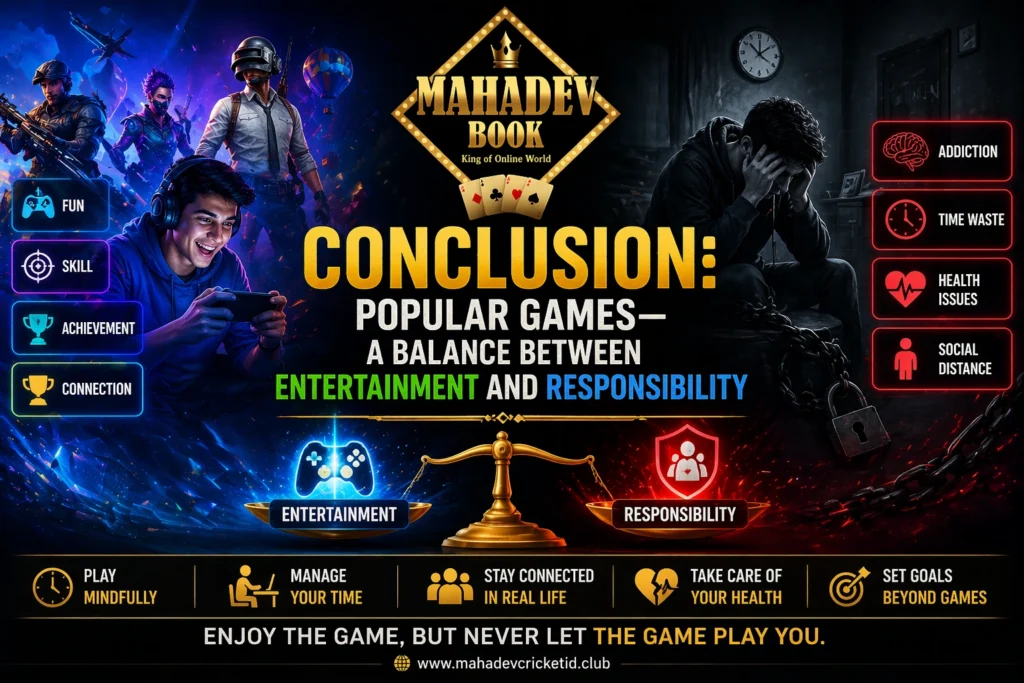
The world of popular games is a powerful reflection of modern digital life. What started as simple entertainment has evolved into a global phenomenon that influences how people think, interact, and spend their time. From immersive gameplay and social connections to career opportunities and technological innovation, popular games have reshaped the meaning of entertainment.
At their best, popular games offer relaxation, creativity, and a sense of achievement. They connect people across borders, encourage strategic thinking, and open doors to new possibilities in careers and digital expression. For many, they serve as a healthy escape and a source of enjoyment in a fast-paced world.
However, the same qualities that make these games engaging can also make them difficult to control. Issues like addiction, mental stress, physical health concerns, and excessive spending highlight the need for awareness and balance. Without mindful use, popular games can shift from being a positive outlet to a harmful habit.
The key lies in responsible gaming. Setting limits, maintaining real-life priorities, and understanding the impact of prolonged gameplay can help players enjoy the benefits without falling into negative patterns. Parents, educators, and individuals all play a role in creating a balanced relationship with gaming.
Ultimately, popular games are neither purely good nor entirely bad—they are tools. Their impact depends on how they are used. When approached with awareness and control, they can enrich lives. When misused, they can create challenges.
As the gaming world continues to grow, one thing remains clear: the power of popular games lies not just in their design, but in the hands of those who play them.
Frequently Asked Questions (FAQs) About Popular Games
1. What are popular games?
Popular games are video or online games that attract a large number of players worldwide. They are widely played due to their engaging gameplay, accessibility, and strong community presence. These games often trend across platforms like mobile, PC, and consoles.
2. Why are popular games so addictive?
Popular games use reward systems, progression levels, and social interaction to keep players engaged. Features like achievements, rankings, and limited-time events create excitement and encourage players to return regularly, sometimes leading to excessive play.
3. Are popular games good for mental health?
Popular games can have both positive and negative effects. They help reduce stress, improve focus, and provide entertainment. However, excessive gaming can lead to anxiety, frustration, and reduced real-life interaction if not balanced properly.
4. Can I earn money from popular games?
Yes, many players earn money through esports, streaming, and online competitions. Platforms like Dream11 Global (external link: dream11global) offer opportunities related to fantasy sports gaming. However, success requires skill, consistency, and responsible participation.
5. How can I control gaming addiction?
To manage gaming habits:
- Set daily time limits
- Take regular breaks
- Focus on offline activities
- Avoid playing late at night
- Stay aware of in-game spending
Balance is the key to enjoying popular games responsibly.
6. Are online gaming platforms safe to use?
Most popular games are safe if used carefully. Always choose trusted platforms and avoid sharing personal or financial information unnecessarily. For more insights and gaming-related updates, you can visit Mahadev Cricket ID: mahadevcricketidclub
7. What is the future of popular games?
The future of popular games includes advancements like virtual reality, cloud gaming, and AI-driven experiences. These innovations will make games more immersive, interactive, and accessible to players worldwide.
If you want, I can also add schema FAQ (SEO format) or create more advanced questions for ranking 👍