

Introduction: Why How to Create an ID is More Important Than Ever
In the modern world, identification is no longer just a formality—it is a necessity. Whether you are enrolling in a school, applying for a job, opening a bank account, or accessing government services, having a valid ID is essential. It acts as proof of who you are and connects you to various systems that enable everyday activities. Without proper identification, even simple tasks can become difficult or, in some cases, impossible.
An ID, or identification document, serves as an official record that verifies your personal details. These typically include your name, date of birth, photograph, and a unique identification number. Depending on the type of ID, it may also include your address, biometric data, or other relevant information. Governments and organizations rely on IDs to maintain accurate records, ensure security, and provide services efficiently.
Over time, the importance of IDs has grown significantly. In earlier days, identification was often limited to local records or community recognition. Today, with digital systems and global connectivity, identification has become more standardized and widely required. From airports to online platforms, identity verification is a critical step in ensuring safety and trust. This shift has made it more important than ever for individuals to understand how to create and manage their IDs properly.
There are many different types of IDs, each serving a specific purpose. Government-issued IDs, such as national identity cards, passports, and driver’s licenses, are among the most widely recognized. These documents are often required for legal and official purposes, including travel, voting, and financial transactions. On the other hand, institutions like schools and companies issue their own IDs to manage access and maintain records. Even digital platforms now require users to create IDs in the form of accounts, which are used to verify identity and provide personalized services.
Creating an ID might seem like a complicated process, especially for beginners. However, when broken down into clear steps, it becomes much easier to understand and complete. The process generally involves identifying the type of ID you need, gathering the required documents, filling out an application form, and completing a verification process. While the exact steps may vary depending on the type of ID and the issuing authority, the overall approach remains similar.
One of the most important aspects of creating an ID is ensuring that all your information is accurate. Even small errors, such as a misspelled name or incorrect date of birth, can lead to delays or complications. That is why it is crucial to double-check all details before submitting your application. Keeping copies of your documents and tracking your application status can also help you stay organized and avoid unnecessary stress.
In addition to physical IDs, digital identification is becoming increasingly popular. Many services now allow users to create digital IDs that can be accessed through smartphones or computers. These digital IDs are often linked to secure systems that use encryption and verification methods to protect user data. As technology continues to evolve, digital IDs are expected to play an even bigger role in how we interact with services and organizations.
Security is another key factor to consider when creating an ID. With the rise of identity theft and online fraud, protecting your personal information is more important than ever. Always ensure that you are applying through official channels and avoid sharing sensitive details with untrusted sources. Using strong passwords and enabling additional security features can further protect your digital identity.
Ultimately, creating an ID is more than just completing a process—it is about establishing your identity in a structured and recognized way. It opens doors to opportunities, simplifies access to services, and ensures that you are recognized within various systems. By understanding the importance of IDs and following the correct steps, you can make the process smooth and hassle-free.
In the following sections, we will explore the detailed steps involved in creating different types of IDs, along with practical tips to help you complete the process successfully.
Types of IDs You Can Create and Their Uses
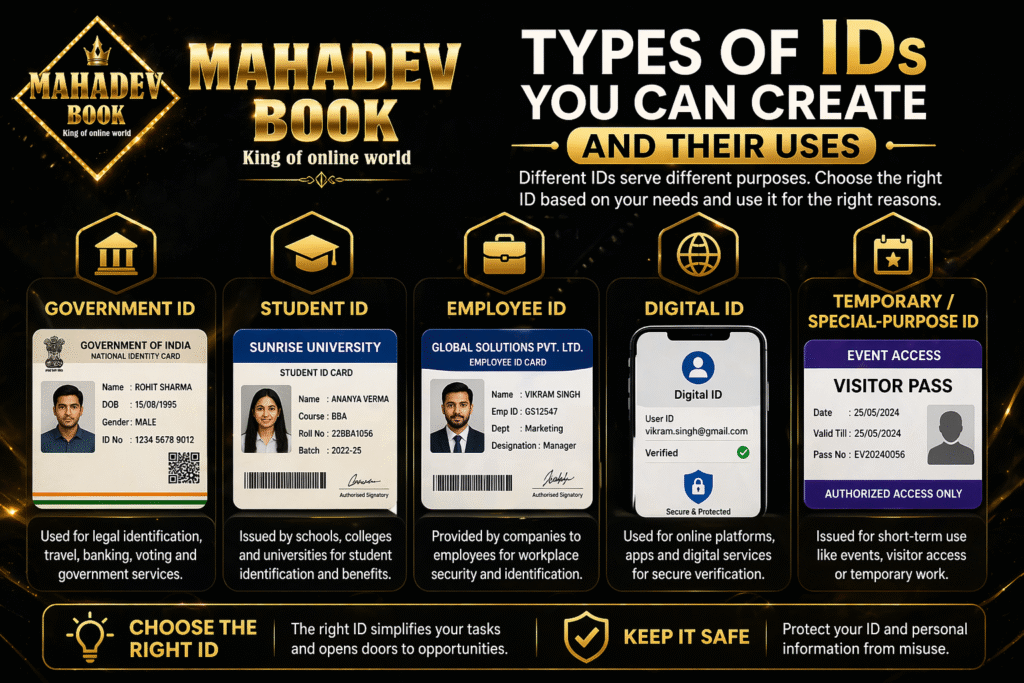
Before starting the process of creating an ID, it is important to understand that not all identification documents serve the same purpose. Different IDs are designed for different needs, and choosing the right one depends on what you intend to use it for. Knowing the types of IDs available can help you avoid confusion and ensure that you apply for the correct document from the beginning.
One of the most commonly used forms of identification is the government-issued ID. These IDs are officially provided by national or regional authorities and are widely accepted as legal proof of identity. Examples include national identity cards, passports, and driver’s licenses. Government IDs are essential for tasks such as traveling, opening bank accounts, applying for jobs, and accessing public services. Because they carry legal authority, the process of obtaining them is usually more detailed and requires strict verification.
Another important category is the educational or student ID. These are issued by schools, colleges, and universities to their students. A student ID not only verifies your enrollment in an institution but also provides access to campus facilities such as libraries, laboratories, and events. In many cases, it also offers additional benefits like discounts on transportation, software, or retail purchases. The process of getting a student ID is typically simpler compared to government IDs, as it is managed internally by the institution.
Similarly, employee IDs are provided by companies and organizations to their staff members. These IDs help maintain workplace security and ensure that only authorized individuals can access certain areas. Employee IDs often include details such as the employee’s name, designation, photograph, and a unique identification number. In some organizations, these IDs also function as access cards for entering buildings or logging into systems. Creating an employee ID is usually handled by the company’s human resources or administration department.
In recent years, digital IDs have become increasingly popular. Unlike physical IDs, digital IDs exist in electronic form and are used primarily for online platforms and services. When you create an account on a website or mobile application, you are essentially creating a digital ID. These IDs are used to verify your identity, manage your data, and provide personalized experiences. With the advancement of technology, digital IDs are now being integrated with secure systems such as biometric authentication and encrypted verification processes.
Another category worth mentioning is temporary or special-purpose IDs. These are issued for specific events or short-term use. For example, visitor passes, event badges, or temporary work permits fall under this category. While they may not have the same level of authority as permanent IDs, they still play an important role in managing access and ensuring security in controlled environments.
Choosing the right type of ID depends largely on your needs and circumstances. For instance, if you need an ID for official or legal purposes, a government-issued ID is the best option. If your requirement is limited to an institution or workplace, then a student or employee ID will be sufficient. For online activities, a digital ID is often all you need. Understanding these distinctions can save you time and effort during the application process.
It is also important to note that each type of ID has its own set of requirements and procedures. Government IDs usually require multiple supporting documents and may involve in-person verification. On the other hand, institutional IDs often rely on existing records within the organization. Digital IDs, meanwhile, can be created quickly but require careful attention to security measures such as strong passwords and verification steps.
Another key factor to consider is validity and renewal. Some IDs, like passports and driver’s licenses, have an expiration date and need to be renewed periodically. Others, such as certain digital IDs, remain active as long as the account is maintained. Keeping track of these details ensures that your ID remains valid and usable when needed.
In conclusion, understanding the different types of IDs is a crucial step in the overall process of identification. Each type serves a unique purpose and comes with its own requirements. By identifying which ID best suits your needs, you can approach the application process with clarity and confidence. In the next section, we will explore the step-by-step process of creating an ID, making it even easier for you to get started.
Step-by-Step Process to Create an ID
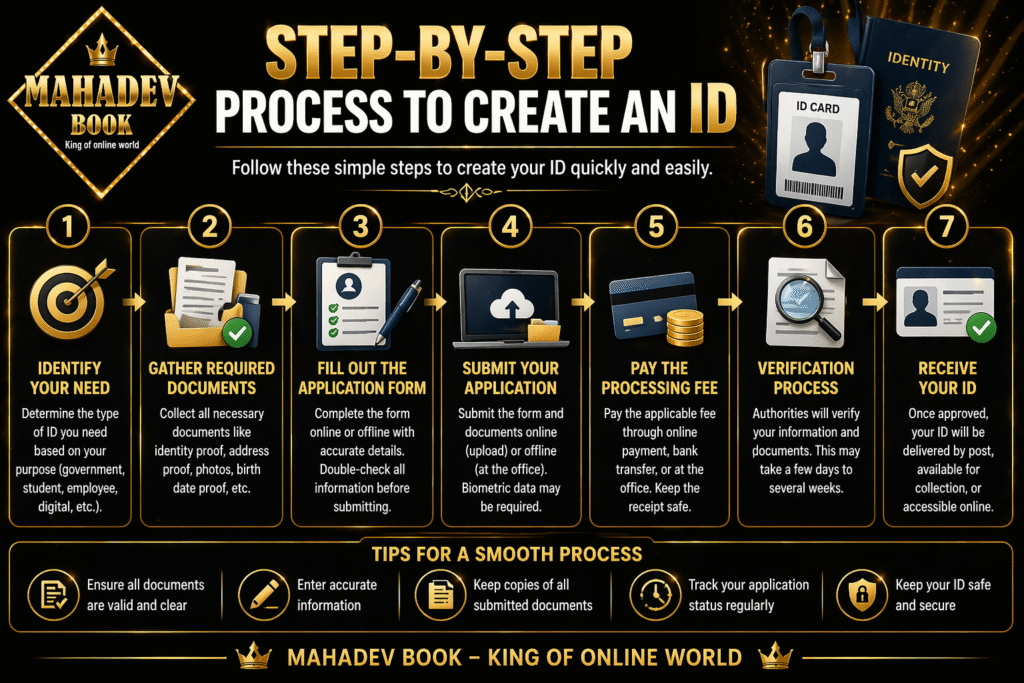
Creating an ID may seem like a complicated task, especially if you are doing it for the first time. However, when the process is broken down into clear and manageable steps, it becomes much easier to understand and complete. Whether you are applying for a government-issued ID, a student ID, or even a digital ID, the general process follows a similar structure. By following the steps carefully, you can avoid mistakes and ensure a smooth application experience.
The first step in creating an ID is identifying the exact type of identification you need. This decision depends on your purpose. For example, if you need an ID for official or legal use, such as travel or banking, you should apply for a government-issued ID. If your requirement is related to education or employment, then a student or employee ID will be more appropriate. Understanding your purpose helps you choose the correct application process from the beginning.
Once you have determined the type of ID you need, the next step is to gather all the required documents. This is one of the most important stages in the process. Most ID applications require proof of identity, proof of address, and sometimes proof of age. Common documents include a birth certificate, utility bills, photographs, or existing identification records. It is essential to ensure that all documents are valid, up to date, and clearly readable. Missing or incorrect documents can delay your application or even lead to rejection.
After collecting the necessary documents, you will need to fill out the application form. This can usually be done either online or offline, depending on the issuing authority. Online applications are becoming more popular because they are faster and more convenient. When filling out the form, it is important to enter accurate information. Even small errors, such as spelling mistakes or incorrect numbers, can cause problems later in the process. Take your time to review all the details before submitting the form.
The next step is submitting your application along with the required documents. If you are applying online, you will need to upload scanned copies or photos of your documents. If you are applying in person, you may need to submit physical copies at a designated office. In some cases, you might also be required to provide biometric data, such as fingerprints or a photograph. This step helps verify your identity and ensures that the ID is issued to the correct person.
Once your application is submitted, you may need to pay a processing fee. The amount of the fee depends on the type of ID and the issuing authority. Payment methods can vary, but most systems now offer multiple options, including online payments, bank transfers, or in-person payments. Make sure to keep a receipt or confirmation of your payment, as it may be required for tracking your application.
After submission and payment, your application will go through a verification process. This step is carried out by the issuing authority to confirm that all the information you provided is accurate. Verification may include checking your documents, confirming your address, or conducting background checks. In some cases, officials may contact you for additional information or clarification. The duration of this process can vary, ranging from a few days to several weeks.
Once the verification process is complete and your application is approved, your ID will be issued. Depending on the type of ID, you may receive it in different ways. Physical IDs are often delivered by mail or made available for collection at a designated office. Digital IDs, on the other hand, can usually be downloaded or accessed through an online platform. It is important to check all the details on your ID once you receive it to ensure that everything is correct.
Finally, it is important to keep your ID safe and secure. Store physical IDs in a secure place and avoid sharing your personal information unnecessarily. For digital IDs, use strong passwords and enable additional security features whenever possible. Taking these precautions will help protect your identity and prevent misuse.
In conclusion, creating an ID is a structured process that involves several key steps, including identifying your needs, gathering documents, completing the application, and going through verification. By following each step carefully and paying attention to detail, you can ensure a smooth and successful experience. In the next section, we will discuss the documents required for ID creation in more detail, helping you prepare even better for the process.
Documents Required for ID Creation
When applying for any type of identification, one of the most important steps is preparing the correct documents. These documents serve as proof of your identity and help authorities verify that the information you provide is accurate. Without the proper documentation, your application may be delayed or even rejected. That is why understanding which documents are required—and why they matter—is essential for a smooth ID creation process.
The most common requirement for creating an ID is proof of identity. This type of document confirms who you are and usually includes your name and photograph. Examples of identity proof include a birth certificate, an existing ID card, or any officially recognized document issued by a trusted authority. In many cases, applicants are required to submit more than one form of identification to strengthen their application.
Another key requirement is proof of address. This document verifies where you live and ensures that your ID is linked to a valid location. Common address proofs include utility bills, bank statements, rental agreements, or official letters from government authorities. It is important that the address on your document matches the information you provide in your application. Any mismatch can cause delays during the verification process.
In addition to identity and address proof, many applications require proof of date of birth. This helps confirm your age and ensures that you meet the eligibility criteria for certain types of IDs. Documents such as birth certificates, school certificates, or official records can be used for this purpose. Providing accurate date-of-birth information is especially important for IDs related to travel, driving, or legal activities.
Photographs are another essential part of most ID applications. You are usually required to submit passport-sized photographs that meet specific guidelines. These guidelines may include background color, image clarity, and facial expression. In some cases, photographs are taken digitally during the application process, especially for modern or biometric IDs. Ensuring that your photo meets the required standards can prevent unnecessary rejections.
For certain types of IDs, additional documents may be required. For example, if you are applying for a student ID, you may need to provide proof of enrollment, such as an admission letter or fee receipt. Similarly, employee IDs may require documents related to your job, such as an appointment letter or company verification. Digital ID platforms may ask for email verification, phone number confirmation, or even biometric data to ensure security.
It is also important to consider the format in which documents are submitted. For online applications, you will typically need to upload scanned copies or clear photographs of your documents. These files should be in the correct format and size as specified by the application guidelines. Blurry or incomplete uploads can lead to rejection or delays. For offline applications, you may need to submit photocopies along with original documents for verification.
Another important aspect is document validity. Expired or outdated documents are usually not accepted. For example, an old utility bill or an expired identification card may not be considered valid proof. Always check the requirements carefully and ensure that all documents are current and relevant. Keeping your documents updated not only helps in ID creation but also makes future applications easier.
Organizing your documents in advance can save you a lot of time and effort. It is a good practice to keep both physical and digital copies of your important documents. This ensures that you can quickly access them whenever needed. Labeling your files clearly and storing them securely can also help you avoid confusion during the application process.
Security is another factor that should not be overlooked. Your documents contain sensitive personal information, and sharing them carelessly can put you at risk of identity theft or fraud. Always submit your documents through official and secure channels. Avoid sharing copies with unknown or unverified sources. If you are uploading documents online, make sure the website is trustworthy and uses secure connections.
In conclusion, having the right documents is a crucial part of creating an ID. From identity proof to address verification and photographs, each document plays a specific role in confirming your details. By preparing your documents carefully, ensuring their accuracy, and following the required guidelines, you can make the ID creation process much smoother and more efficient. In the next section, we will look at common mistakes to avoid during ID creation, helping you prevent delays and complete your application successfully.
Common Mistakes to Avoid When Creating an ID
Creating an ID may appear straightforward, but many applicants face delays or rejections due to simple and avoidable mistakes. These errors often occur because of a lack of attention to detail, incomplete preparation, or misunderstanding of the requirements. By being aware of the most common mistakes, you can take the necessary precautions and ensure that your ID application process goes smoothly from start to finish.
One of the most frequent mistakes people make is providing incorrect or inconsistent information. Even a small spelling error in your name or a wrong date of birth can lead to complications. The information you provide in your application must match exactly with the details in your supporting documents. Any mismatch can raise red flags during the verification process and may result in rejection or delays. It is always a good idea to double-check every detail before submitting your application.
Another common issue is submitting incomplete applications. Many applicants forget to fill out certain sections of the form or skip required fields. In some cases, they may also fail to attach all the necessary documents. Incomplete applications are often rejected immediately, which means you will have to restart the process. To avoid this, carefully review the application form and ensure that all required fields are filled and all documents are properly attached.
Poor-quality document uploads or photocopies are also a major problem, especially in online applications. Blurry images, cut-off text, or unclear scans can make it difficult for authorities to verify your information. This can lead to delays or requests for resubmission. Always ensure that your documents are clear, properly aligned, and fully visible. Using a good scanner or a high-quality camera can make a significant difference.
Many people also overlook the importance of following instructions and guidelines. Each type of ID has its own specific requirements, including document formats, photo specifications, and submission procedures. Ignoring these guidelines can result in your application being rejected. For example, submitting a photograph that does not meet the required size or background criteria can cause unnecessary delays. Carefully reading and following the instructions provided by the issuing authority is essential.
Another mistake that applicants often make is using outdated or invalid documents. Expired documents are usually not accepted, and submitting them can lead to immediate rejection. It is important to check the validity of all your documents before applying. If any document is outdated, make sure to update or renew it before starting the application process.
Delays in payment or incorrect payment methods can also create problems. Some applicants either forget to pay the required fee or use an unsupported payment method. This can prevent the application from being processed. Always ensure that you complete the payment step correctly and keep a record of your transaction for future reference.
Lack of awareness about the verification process is another common issue. Some applicants assume that once they submit their application, the process is complete. However, verification is a crucial stage that may require additional actions, such as responding to queries or providing extra documents. Ignoring communication from the issuing authority can result in your application being canceled. Regularly checking your email or application status can help you stay updated and respond promptly if needed.
Security mistakes are also becoming increasingly common, especially with digital ID applications. Sharing personal information with untrusted sources or using unsecured websites can put your data at risk. Always ensure that you are applying through official and secure platforms. Avoid clicking on suspicious links or sharing your documents with unknown individuals.
Another overlooked mistake is not keeping copies of submitted documents and application details. Having copies can be extremely useful if you need to track your application, resolve issues, or reapply. Maintaining a record of your documents and confirmation receipts helps you stay organized and prepared for any situation.
Lastly, many applicants underestimate the importance of patience and proper planning. Rushing through the process often leads to errors. Taking your time to understand the requirements, prepare your documents, and review your application can significantly improve your chances of success.
In conclusion, avoiding common mistakes is key to a smooth ID creation process. By ensuring accuracy, completeness, and adherence to guidelines, you can minimize delays and increase the likelihood of approval. Being careful, organized, and attentive throughout the process will help you obtain your ID without unnecessary complications. In the next section, we will explore useful tips to help you get your ID approved faster and more efficiently.
FAQ: How to Create an ID (Complete Guide)
1. What is the easiest way to understand how to create an ID?
The easiest way to understand how to create an ID is to follow a simple step-by-step process. First, identify the type of ID you need. Then gather the required documents, fill out the application form, submit it, complete verification, and finally receive your ID. When learning how to create an ID, breaking the process into steps makes it much more manageable.
2. How to create an ID online step by step?
If you want to know how to create an ID online, start by visiting the official website of the issuing authority. Next, register or sign up, fill in your personal details, upload required documents, and submit your application. After that, complete any verification process. Understanding how to create an ID online can save time and make the process faster compared to offline methods.
3. What documents are required to create an ID?
When learning how to create an ID, you must prepare essential documents such as proof of identity, proof of address, and date of birth proof. Some IDs may also require photographs or biometric data. Knowing the document requirements is a key step in understanding how to create an ID successfully.
4. How long does it take to create an ID?
The time required depends on the type of ID and the verification process. In most cases, once you understand how to create an ID and submit everything correctly, it can take anywhere from a few days to several weeks. Faster processing is possible if you follow all steps carefully.
5. Can I create an ID without visiting an office?
Yes, in many cases, you can learn how to create an ID entirely online. Many systems now allow users to submit applications, upload documents, and complete verification digitally. However, some IDs may still require in-person verification. Knowing your ID type helps you understand how to create an ID without visiting an office.
6. What are the steps involved in how to create an ID?
The main steps in how to create an ID include:
- Choosing the type of ID
- Collecting documents
- Filling out the application
- Submitting the form
- Completing verification
- Receiving your ID
Following these steps correctly is essential when learning how to create an ID.
7. What are common mistakes when learning how to create an ID?
Common mistakes include entering incorrect details, uploading unclear documents, or submitting incomplete applications. When understanding how to create an ID, avoiding these mistakes is very important. Always double-check your information to ensure a smooth process.
8. Is it safe to create an ID online?
Yes, it is safe if you follow the correct process. When learning how to create an ID online, always use official websites and secure platforms. Avoid sharing personal information on unknown sites. Security is a key part of understanding how to create an ID safely.
9. Can I edit my details after submitting an ID application?
In some cases, corrections can be made, but it depends on the system. When learning how to create an ID, it is always better to review all details before submission to avoid errors. This helps prevent delays and ensures faster approval.
10. Why is it important to learn how to create an ID correctly?
Understanding how to create an ID is important because it gives you access to essential services like banking, travel, education, and employment. A properly created ID ensures your identity is verified and recognized. Learning how to create an ID correctly helps you avoid delays, rejections, and unnecessary complications.
Final Thoughts on How to Create an ID
Learning how to create an ID is a valuable skill in today’s world. Whether you are applying online or offline, following the correct steps and preparing the right documents makes the process simple and efficient. By understanding how to create an ID, you can save time, avoid mistakes, and ensure a smooth application experience.
Conclusion: Mastering How to Create an ID the Right Way
Understanding how to create an ID is an essential skill in today’s fast-moving digital and administrative world. Whether you need an ID for official purposes, education, employment, or online access, knowing how to create an ID correctly can save you time, effort, and unnecessary complications. Throughout this guide, we have explored every important aspect of how to create an ID, from understanding different types of IDs to following the correct step-by-step process.
One of the most important things to remember about how to create an ID is preparation. When you clearly understand your purpose and choose the right type of ID, the entire process becomes much easier. Many people face delays simply because they are unsure about how to create an ID or apply for the wrong type. By identifying your needs in advance, you can take the first step in mastering how to create an ID effectively.
Another key factor in learning how to create an ID is gathering the correct documents. Without proper documentation, even the most carefully filled application can be rejected. That is why knowing which documents are required is a crucial part of understanding how to create an ID. Ensuring that your documents are valid, clear, and up to date will significantly increase your chances of approval.
Accuracy also plays a major role in how to create an ID. Small mistakes, such as incorrect spelling or mismatched details, can cause delays in the verification process. When you are learning how to create an ID, always double-check your information before submitting your application. Taking a few extra minutes to review your details can save you from having to restart the process.
In addition to accuracy, following the correct steps is essential when understanding how to create an ID. From filling out the application form to submitting documents and completing verification, each step must be completed carefully. Skipping steps or ignoring instructions can lead to rejection. By following a structured approach, you can ensure that your journey of how to create an ID is smooth and successful.
Technology has also made how to create an ID much more convenient than before. Today, many IDs can be created online, allowing users to complete the process from the comfort of their homes. Learning how to create an ID online not only saves time but also reduces the need for physical visits to offices. However, it is important to use only official and secure platforms when applying online to protect your personal information.
Security is another important aspect of how to create an ID. Your ID contains sensitive personal details, and protecting this information should always be a priority. When learning how to create an ID, make sure you avoid sharing your data with untrusted sources. Using strong passwords and secure systems can help keep your identity safe.
Avoiding common mistakes is equally important in mastering how to create an ID. Many applicants face issues due to incomplete forms, poor-quality document uploads, or failure to follow guidelines. By being aware of these mistakes, you can take proactive steps to avoid them. This not only speeds up the process but also improves your chances of getting your ID approved without delays.
Another important point to consider in how to create an ID is patience. While some IDs are issued quickly, others may take time due to verification procedures. Understanding that the process requires time and staying updated with your application status can help you remain stress-free. Patience and proper planning go a long way in successfully completing how to create an ID.
In conclusion, learning how to create an ID is not just about completing an application—it is about understanding the process, preparing the right documents, and following each step carefully. With the right approach, anyone can master how to create an ID without difficulty. By applying the tips and steps shared in this guide, you can ensure a smooth, efficient, and successful ID creation experience.
Now that you fully understand how to create an ID, you are ready to take action and complete your application with confidence.